Why Is Google Business Profile Important for SEO?
Why is Google Business Profile important for SEO? It drives local visibility, trust, clicks, and qualified leads from high-intent searches.
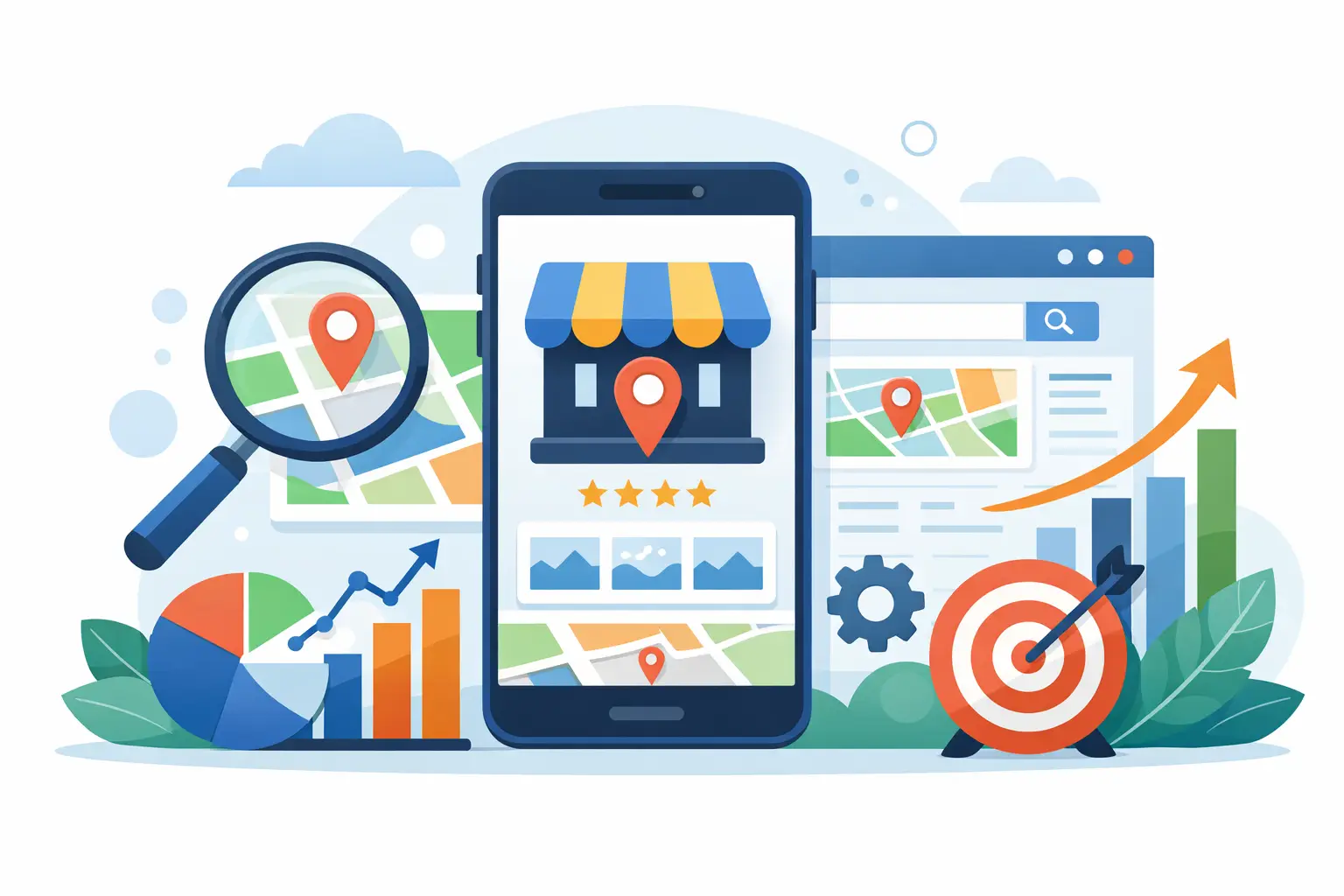
A law firm can spend thousands on a polished website and still lose local search traffic to a competitor with a stronger Google Business Profile. That happens every day. If you're asking why is google business profile important for seo, the short answer is this: it is one of the most direct ways to win visibility, trust, and leads from people already searching for your service in your market.
For local service businesses, SEO is not only about ranking web pages. It is about showing up where buyers actually make decisions. In many searches, that means the map pack, review panel, call button, directions button, and business details that appear before a user ever clicks a website. Your Google Business Profile sits at the center of that behavior.
Why is Google Business Profile important for SEO in local markets?
Google Business Profile matters because it gives Google structured, verified, location-based data about your business. That affects how confidently Google can show your company for local intent searches such as "dentist near me," "real estate agent in Dallas," or "mortgage broker open now."
A traditional website tells Google what you do. A properly managed Google Business Profile tells Google where you do it, when you are available, how customers rate you, and whether your business appears active and legitimate. For local SEO, those signals are not cosmetic. They influence whether you appear in the local pack, on Google Maps, and in branded search results.
This is where many businesses get the strategy wrong. They treat the profile like a directory listing they set once and forget. Google treats it more like a living business record. Accuracy, engagement, and freshness all matter.
Google Business Profile affects visibility before the website click
A lot of SEO conversations still focus on blue-link rankings. That is incomplete. For local service businesses, the real estate above those listings often carries more commercial value.
When someone searches for a dentist, attorney, broker, or agent, Google often shows a map pack first. If your profile appears there, you can earn calls, direction requests, and visits without the user ever touching your website. That does not make your site less important. It means your local SEO system starts earlier than most businesses think.
This is especially valuable for high-intent searches. People using local modifiers or mobile searches are often close to taking action. They are not researching for fun. They need a provider. A strong profile puts your business in front of them at the exact moment they are ready to choose.
Relevance, distance, and prominence are not theory
Google has publicly described local ranking around three broad factors: relevance, distance, and prominence. Your Google Business Profile influences all three.
Relevance improves when your categories, services, business description, and supporting content clearly match what the searcher wants. If you are a personal injury law firm but your profile is thin, miscategorized, or missing services, Google has weaker evidence about when to show you.
Distance is more straightforward. Google uses the searcher's location or the location named in the query and compares it with your business location or service area. You cannot game geography forever, and you should not try. But you can make sure your location data is accurate and consistent.
Prominence is where operational discipline shows up. Reviews, review velocity, photos, citations, brand mentions, and overall business credibility all shape how established your business appears. That is one reason two companies in the same city with similar websites can perform very differently in local search.
Reviews are not just trust signals. They are SEO inputs.
Most owners understand that reviews influence buyer behavior. Fewer understand that reviews also affect local search performance.
A healthy review profile gives Google current, third-party validation that your business is active and delivering a real service to real customers. Review count matters, but quality and recency matter too. A business with 180 reviews from three years ago may not outperform a competitor with 75 recent, detailed reviews and consistent response activity.
Reviews also shape click-through behavior. If your business appears in the map pack with a strong star rating and useful review language, more people engage with your listing. That engagement can reinforce performance over time. It is not a simple one-variable system, but the pattern is clear: trusted profiles tend to earn more action.
For service businesses, this is a revenue issue, not a vanity metric. Better reviews can mean more calls from higher-intent prospects before a competitor gets the chance.
Profile completeness improves conversion, not just ranking
A complete Google Business Profile usually performs better because it reduces uncertainty. Searchers want fast answers. If your profile shows services, hours, service areas, photos, FAQs, and recent updates, the buyer has less friction between search and contact.
That matters more than many businesses realize. Local SEO is not just about being seen. It is about converting visibility into action. If your listing lacks core information, people bounce to another option. Google notices user behavior, and your business loses the lead.
For example, a mortgage broker with clear service details, verified hours, and strong reviews will often outperform a broker with a better-looking website but a neglected profile. Why? Because local buyers reward clarity and speed.
Why is Google Business Profile important for SEO if you already have a strong website?
Because the website and the profile do different jobs.
Your website handles depth. It explains services, captures leads, supports ranking through content, and builds authority over time. Your Google Business Profile handles local discovery and decision support at the point of search.
The best results come when the two are engineered to work together. Your services should align. Your location information should match. Your core categories and page content should reinforce each other. If your site says one thing and your profile signals another, Google gets mixed inputs.
This is where many fragmented marketing setups break down. One vendor built the site, another ran ads, nobody owns local SEO, and the profile sits untouched. The result is wasted search demand. Less theatre, more execution applies here.
Common mistakes that weaken local SEO performance
The biggest mistake is neglect. Businesses claim the profile, upload a logo, and move on. That leaves obvious gains on the table.
The second mistake is using the wrong primary category. Categories carry real weight in local relevance. If you choose a broad or inaccurate category, your visibility can suffer even if everything else looks acceptable.
The third is poor operational hygiene - inconsistent hours, missing services, outdated photos, unanswered reviews, and duplicate listings. None of these issues are glamorous, but local SEO is often won by disciplined execution rather than flashy tactics.
There is also an over-optimization problem. Stuffing keywords into the business name, writing spammy updates, or creating misleading service areas can create risk. Sometimes businesses get short-term gains from aggressive tactics, but those gains are fragile. Verified, accurate, sustainable signals are the safer path.
What a strong Google Business Profile actually looks like
A high-performing profile is verified, complete, and actively managed. Its business name matches reality. Its primary and secondary categories fit the actual service model. Hours are correct. Services are filled out. Photos reflect the current business. Reviews arrive consistently, and responses are handled professionally.
It also supports the rest of your local search system. The website location pages, contact details, review generation process, and local content strategy all reinforce the same market position. That consistency helps Google trust the data and helps prospects trust the business.
For multi-location brands, this becomes even more important. Each location needs its own operationally accurate profile, local landing experience, and review flow. Treating all locations as one generic entity usually undercuts local performance.
The real business value is qualified demand
The reason Google Business Profile matters for SEO is not that it looks good on a checklist. It matters because it captures qualified demand when people are ready to act.
A person searching for "divorce lawyer near me" or "emergency dentist open Saturday" is not top-of-funnel traffic. That is commercially valuable intent. If your profile earns the impression and your listing builds enough confidence to get the click or call, your SEO investment is working where it counts.
That is why sophisticated local growth systems treat Google Business Profile as core infrastructure, not an afterthought. The profile, website, reviews, ads, and intake process all affect the same outcome: booked consultations, appointments, and closings.
If your market depends on local trust and local visibility, your Google Business Profile is not optional overhead. It is part of the sales engine. Keep it accurate, keep it active, and treat it like the revenue asset it is.