What Is Google Business Profile Optimization?
What is google business profile optimization? Learn how profile setup, reviews, photos, and local signals turn searches into calls and leads.

A lot of local businesses think they have a Google Business Profile because they claimed it once, added business hours, and moved on. That is not optimization. If you're asking what is google business profile optimization, the short answer is this: it is the ongoing work of structuring, improving, and maintaining your profile so it ranks better in local search and converts more searchers into calls, form submissions, and booked appointments.
That distinction matters. A claimed profile is a listing. An optimized profile is a lead generation asset.
For dentists, law firms, mortgage brokers, and real estate teams, this is often the first touchpoint a prospect sees. Before they visit your website, they see your reviews, service categories, photos, hours, map location, and the way your business appears against nearby competitors. If that profile is incomplete, inconsistent, or poorly managed, you lose trust before the conversation even starts.
What is Google Business Profile optimization in practice?
Google Business Profile optimization is the process of improving the accuracy, completeness, relevance, and conversion strength of your listing so Google can confidently surface it for local intent searches.
That includes the obvious fields, like your business name, primary category, address, phone number, website, and hours. But it also includes less obvious signals: service descriptions, review velocity, owner responses, appointment links, photos, Q&A management, business attributes, and location consistency across the web.
Google is trying to answer a commercial question fast. Who is nearby, credible, active, and relevant to this search? Optimization helps your profile send stronger signals on all four.
This is why local SEO and Google Business Profile work overlap, but they are not identical. Local SEO covers your website, citations, reputation, and broader map visibility. Your profile is one of the highest-leverage components inside that system.
Why it matters more than most businesses realize
For many service businesses, map pack visibility drives the highest-intent traffic available. Someone searching "emergency dentist near me," "real estate lawyer," or "mortgage broker in Dallas" is not casually browsing. They are evaluating providers with intent to act.
Your Google Business Profile sits at that decision point. It shapes whether someone calls now, compares three competitors, or leaves altogether.
Optimization affects two outcomes at once. First, it can improve visibility in local map results. Second, it can improve conversion after visibility is earned. Those are related, but they are not the same thing.
A profile can rank reasonably well and still underperform because the photos look dated, reviews are weak, categories are misaligned, or business details create friction. On the other hand, a polished profile with strong reviews can still struggle if the market is crowded and the website, local citations, and proximity signals are weak. That is where business owners need a realistic view. Google Business Profile optimization helps, but it is not magic and it does not replace the rest of your local growth system.
The core components of an optimized profile
The foundation is accuracy. Your business name, address, phone number, hours, and website need to be correct and consistent. If Google sees conflicting information across directories or your own site, confidence drops.
Category selection is next, and it is more strategic than it looks. Your primary category heavily influences which searches you can appear for. Secondary categories expand that relevance. Pick the wrong primary category and you can suppress visibility even if everything else looks solid.
Services matter because they help Google understand your commercial scope. A law firm should not stop at "law firm" if its actual revenue comes from family law, real estate law, or personal injury. A dental clinic should reflect the procedures it wants to attract. A mortgage company should structure loan and lending services clearly. This is not about stuffing keywords. It is about aligning the profile with how prospects actually search.
Reviews are a trust signal and a ranking signal. Not every review has the same commercial value. A steady stream of recent, detailed reviews that mention service quality and outcomes is stronger than a large volume of vague, older ones. Response quality matters too. When owners respond consistently and professionally, it shows activity and reinforces credibility.
Photos are often underused. Google wants profiles that help users evaluate a business quickly. For office-based services, that means exterior photos, interior photos, team images, signage, reception areas, treatment rooms where appropriate, and brand-consistent visuals. Poor photos make a business look neglected. No photos make it easier to skip.
Then there are profile features many businesses ignore: appointment links, business attributes, products or services, posts, and Q&A. Not all of these carry equal weight, and some industries will get more value than others. But together they make the profile more complete and more useful.
What Google likely rewards
Google does not publish a simple formula, and anyone who claims exact certainty is selling theatre. But local ranking patterns are fairly consistent.
Relevance is a major factor. Your profile needs to match the search intent through categories, services, descriptions, and supporting signals from your website.
Distance matters because Google is still trying to return nearby options. You cannot optimize your way out of geography entirely.
Prominence is where broader brand strength enters the picture. Reviews, citations, links, local mentions, and website authority all support your profile's ability to compete.
That means optimization is not a one-time setup task. It is a maintenance process tied to reputation, content, operations, and customer experience.
Common mistakes that quietly suppress results
The most common issue is treating the profile like a form to complete rather than a channel to manage. Businesses set it up once and let details age out. Holiday hours stay wrong. Team photos never get updated. Reviews go unanswered. Services remain generic.
Another mistake is category drift. A business chooses broad categories that sound right internally but do not match search behavior. That is expensive because category relevance can shape visibility at the root.
Keyword stuffing is another problem. Cramming cities or service terms into the business name violates guidelines and can lead to suspensions or edits. Even when businesses get away with it temporarily, it creates instability. Reliable growth systems are built on clean inputs, not rule bending.
There is also the conversion mistake. Some profiles rank adequately but fail to capture action because the phone number routes poorly, the website loads slowly, the appointment flow is clunky, or no one answers inquiries quickly. Visibility without intake discipline is wasted demand.
What good optimization looks like for service businesses
For a dental practice, optimization usually means aligning categories with the most profitable services, improving review volume and recency, showcasing the office visually, and making booking friction low.
For law firms, it often means stronger category precision, clearer service segmentation, reputation management, and a profile that supports trust at first glance. Legal buyers are cautious. Thin profiles underperform.
For mortgage and lending businesses, trust and responsiveness are everything. Reviews, accurate service descriptions, and frictionless contact options matter because prospects compare speed and credibility fast.
For real estate teams, the profile has to reinforce local presence and professionalism. Strong media, review quality, and consistent business information are non-negotiable in competitive markets.
The pattern is the same across industries: profile optimization works best when it reflects the real business model, not generic marketing language.
How to think about Google Business Profile optimization as a system
The strongest results usually come when the profile is connected to the rest of your digital infrastructure. Your website should reinforce the same services and geographies. Reviews should be actively requested through a process, not left to chance. Calls, forms, and appointment requests should feed into follow-up workflows. Reporting should show whether profile traffic is turning into revenue opportunities.
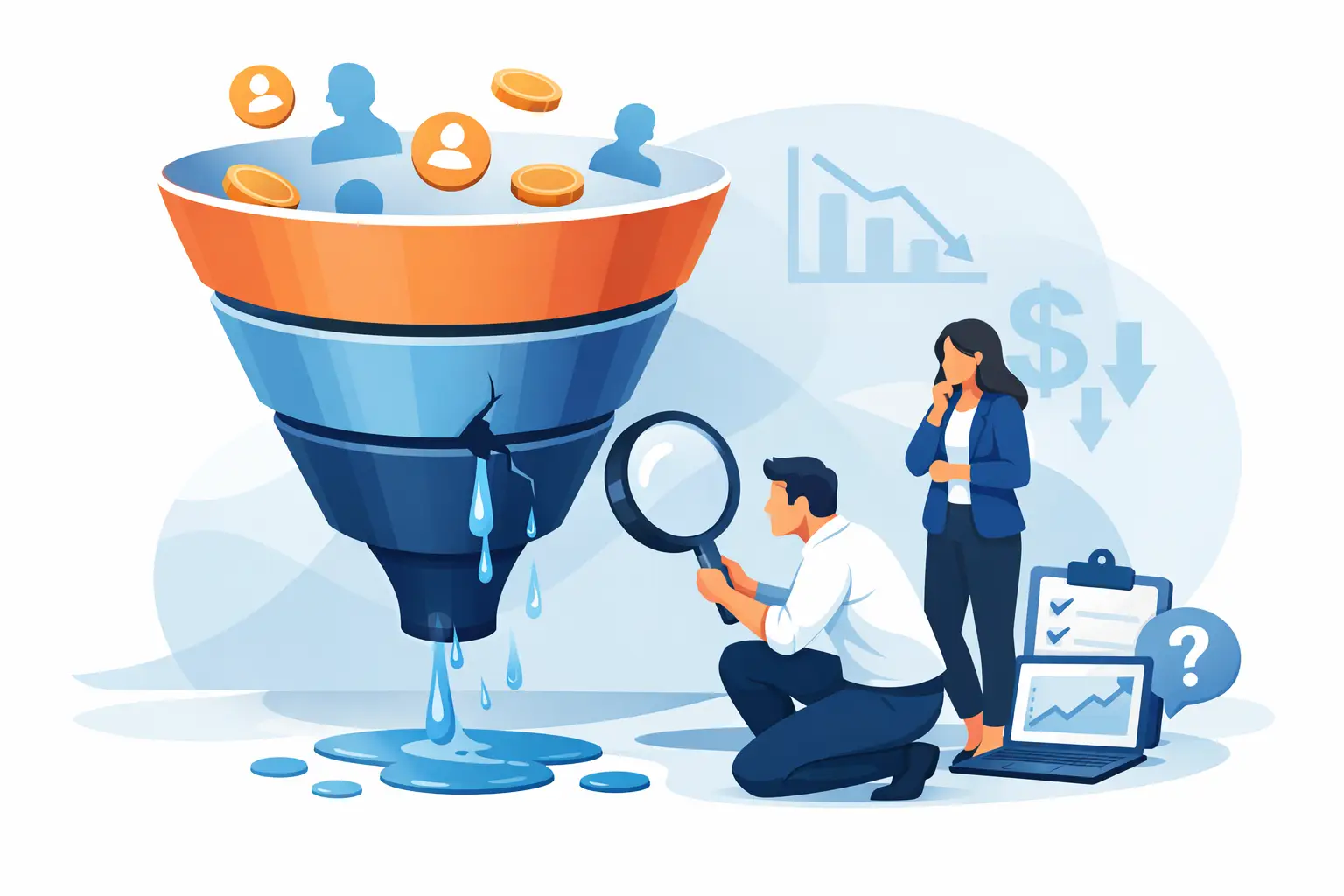
This is where many businesses get stuck. They hire one vendor for the website, another for SEO, a third for ads, and no one owns the operational handoff. The profile may generate interest, but the system behind it leaks. Less theatre, more execution means building around the full path from search to sale.
A company like Rivelo approaches this differently because the profile is treated as one component in a revenue system, not a side task for whoever has admin access. That is the right lens if you care about booked calls instead of vanity impressions.
So, what is Google Business Profile optimization really?
It is not just filling in fields. It is the discipline of making Google confident enough to rank your business and making buyers confident enough to contact you.
That requires accurate data, strategic category choices, service alignment, review management, visual credibility, and operational follow-through. It also requires accepting the trade-offs. In some markets, profile work alone can move the needle quickly. In others, competition is strong enough that you need local SEO, a better website, and tighter conversion systems to see real gains.
If your profile is one of the first things prospects see, treat it like infrastructure. Because that is what it is. And infrastructure, when built properly, keeps producing long after the setup work is done.