Multi Location SEO Strategy That Drives Bookings
Build a multi location seo strategy that turns every office, practice, or branch into a findable, credible source of qualified local bookings at scale.
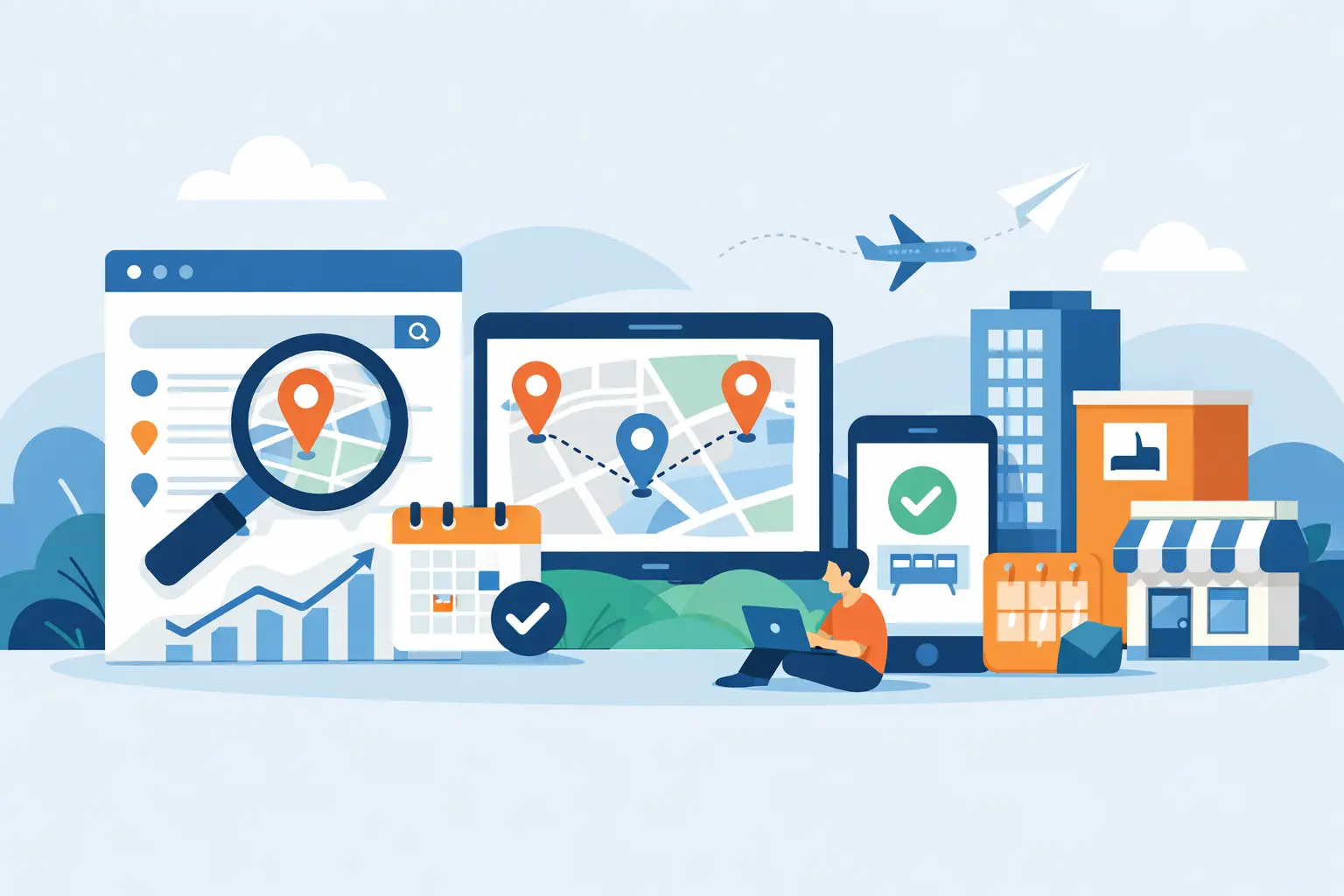
A prospect searches for an emergency dentist, a real estate team, or a mortgage broker near them. They do not care that your company has 12 locations, a polished brand deck, or a national marketing budget. They care whether the closest office looks credible, answers the right question, and makes contact easy. A multi location seo strategy exists to make that outcome repeatable across every market without turning your website into a pile of thin, duplicate location pages.
For service businesses, local visibility is not a vanity metric. It is the front end of a revenue system. The right page must rank, the right location must appear in map results, the call must be routed correctly, and the lead must receive a fast response. If any one of those pieces fails, rankings alone do not produce booked consultations.
What a Multi Location SEO Strategy Actually Solves
Multi-location SEO is the operating model for helping each physical office, branch, or service area compete in its own local search market while preserving the authority of the parent brand. It is not simply adding city names to page titles or cloning one page 20 times.
Each market has different competitors, search behavior, review profiles, local regulations, and service demand. A family law firm may need visibility for divorce mediation in one city and estate litigation in another. A dental group may have one office built around implants and another that wins on same-day emergency appointments. Treating those markets as interchangeable produces generic pages and generic results.
The business trade-off is clear. Centralization protects consistency and reduces production cost. Local relevance earns the click and the call. A strong system gives each location enough independent signal to compete without allowing local teams to create inconsistent branding, inaccurate hours, or unsupported service claims.
Start With Location Architecture, Not Content Volume
Before writing pages, define how the business is structured. Search engines and customers need a clean answer to three questions: where do you operate, what does each location offer, and which location should handle this inquiry?
For businesses with staffed offices, each location should have a dedicated page with a unique URL, accurate name, address, phone number, office hours, directions, services, provider or team information, and a clear booking path. This page is the local conversion asset, not a placeholder in a footer.
A service-area business needs more restraint. Creating a separate page for every suburb you could theoretically serve is a common failure mode. If there is no office, team presence, meaningful local proof, or distinct service offering, a city page can become a doorway page built only to capture traffic. That creates a weak customer experience and an unstable SEO foundation.
Use a hierarchy that matches reality. The primary brand site establishes overall authority. Location pages represent real offices or defined markets. Service pages explain core offerings. Where demand justifies it, location-service pages can address high-value combinations such as "dental implants in Plano" or "commercial real estate services in Tampa." Build those pages only when the service is genuinely available, commercially important, and supported by specific content.
Give Every Location a Job
Do not ask every office page to rank for every service. Assign priorities based on capacity, margin, local demand, and competitive difficulty. If a lending branch has limited capacity for refinances but wants more purchase-loan referrals, the page, local content, and calls to action should reflect that reality.
This prevents a common disconnect: marketing promotes a service the operations team cannot deliver quickly, then reports a lead-quality problem that was created upstream.
Build Google Business Profiles as Revenue Assets
For local intent, the map pack often matters as much as organic rankings. Every eligible office needs its own verified Google Business Profile, managed from a central system but maintained with local accuracy.
The basics are non-negotiable: correct business name, address, local phone number, hours, category selection, appointment URL, services, photos, and regular updates. But the operational detail matters more than most teams expect. A listing with an outdated holiday schedule, calls routed to a dead extension, or reviews left unanswered is a conversion leak in public.
Avoid keyword stuffing the business name, using virtual offices, or creating listings for locations where customers cannot actually meet the business. Those shortcuts can trigger suspensions and erase visibility overnight. Engineering DNA, not template DNA, means designing a system that remains defensible when platforms review it.
Review management should also be location-specific. A five-star reputation at one office does not automatically improve trust at another. Trigger review requests after completed appointments or closed matters, route negative feedback into a recovery workflow, and respond with enough care to show future prospects that the business is accountable. Do not use canned responses that make a professional service firm sound automated in the worst way.
Create Local Pages That Earn Their Existence
A location page should answer the questions a nearby buyer has before they call. Who will serve me? What can this office help with? Is it close and convenient? Can I trust it? What happens after I submit the form?
That requires more than swapping a city name in a template. Strong local pages typically include original office photography, team or practitioner details, location-specific services, neighborhood context where it is useful, parking or accessibility information, testimonials tied to that office when permitted, and direct contact options.
For regulated industries, accuracy takes priority over aggressive copy. Law firms should avoid guarantees and ensure attorney information is current. Mortgage businesses must keep licensing and disclosure requirements aligned with the appropriate market. Dental practices should not make clinical claims that cannot be substantiated. SEO that creates compliance exposure is not growth.
Local content can support these pages, but only when it has a purpose. A real estate team might publish a market update tied to an area it actively serves. A dental group might explain how to access urgent care at a specific office. Do not manufacture shallow "best neighborhoods" or "why choose us in city X" articles just to add inventory. Less theater, more execution.
Connect Local SEO to Conversion Operations
The ranking is only the first handoff. Multi-location businesses lose a surprising amount of revenue after the click because forms enter a shared inbox, calls are unanswered, or leads are sent to the wrong office.
Every location should have clear routing rules. Calls should reach the correct front desk or intake team. Forms should capture the selected location and service request. Chat should qualify basic intent and offer the right booking path. If no one responds outside business hours, the system should set expectations and create an immediate follow-up task rather than leaving the prospect in silence.
Tracking needs the same discipline. Measure calls, form submissions, chat conversations, booked appointments, consultation show rates, and qualified opportunities by location. For high-consideration services, a lead count is not enough. A law firm needs to know which office produces retained matters. A lender needs to know which market produces funded loans. A dental group needs to see whether local search produces treatment starts, not just emergency call volume.
Call tracking can help, but implement it carefully. Maintain consistent primary location data across the website and major business profiles, then use tracking numbers in a way that does not create conflicting business information. The goal is attribution without damaging local trust signals.
Use Central Standards With Local Accountability
The scalable model is centralized governance with local inputs. Corporate or marketing leadership should own the technical framework, brand rules, analytics, reporting, review workflows, and content standards. Location leaders should supply the facts that cannot be faked: staffing changes, local photos, service availability, customer questions, and operational constraints.
Set a recurring quality-control process. Review business profile accuracy, page content, reviews, local rankings, broken booking paths, and lead-response times. Open a new office only when its digital foundation is ready. A location launch without a verified profile, a useful local page, call routing, and a review plan starts at a disadvantage that compounds quickly.
This is also where automation earns its place. Use it for reminders, routing, reporting, and follow-up discipline. Do not use it to mass-produce location copy or impersonate human judgment in sensitive client conversations.
Measure the Markets That Matter
A useful multi location SEO strategy does not obsess over one national keyword position. It measures market-level performance: visibility in the local map results, non-branded organic traffic, calls and form completions, booking rate, response speed, qualified lead rate, and downstream revenue.
Expect uneven performance. A newer office may need more reviews and local citations before it competes. A dense urban market may require stronger service pages and paid search support while organic authority builds. A rural office may win quickly with a cleaner profile and better conversion path. The correct investment depends on market economics, not a one-size-fits-all dashboard.
The practical goal is simple: every real location should be easy to find, easy to trust, and operationally ready to convert demand. When those pieces are engineered together, local SEO stops being a collection of listings and pages. It becomes a dependable acquisition channel that can scale without breaking the customer experience.