Local SEO vs Google Ads: Which Drives Better Leads?
Compare local SEO vs Google Ads for service businesses. See where each wins on speed, cost, trust, and lead quality - and how to invest with confidence.
A personal injury lawyer with no visibility in Google Maps can spend heavily on ads and still lose calls to the firm with 250 credible reviews. A dental practice with a strong local presence can rank well for months, then watch new-patient volume soften when a competitor buys the top ad position. That is the real local SEO vs Google Ads decision: not which channel is universally better, but which constraint is costing your business revenue right now.
For service businesses, search marketing is not a vanity exercise. It is an intake system. The work must produce qualified calls, form submissions, consultations, and booked appointments that staff can actually handle. Traffic without conversion is theater. Rankings without a functioning intake process are just a more expensive way to miss leads.
Local SEO vs Google Ads: The Operating Difference
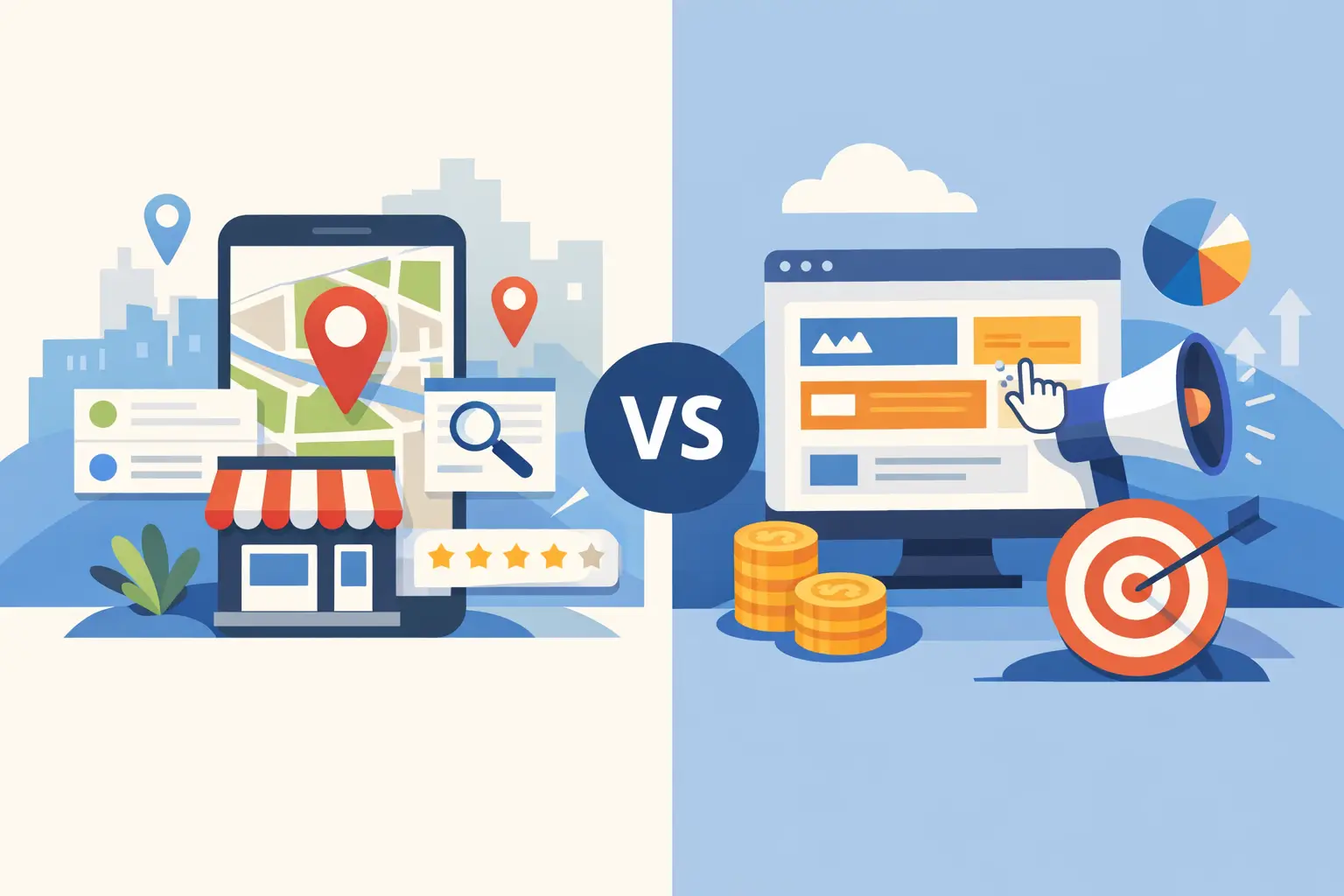
Local SEO builds an asset. Google Ads rents attention. Both can place your business in front of people actively looking for a dentist, lawyer, mortgage broker, or real estate team. The difference is timing, durability, and control.
With Google Ads, you can appear in paid results as soon as campaigns are approved. You choose the geographic area, services, hours, budgets, and search terms you are willing to pay for. This makes ads useful when you need demand now, are opening a new office, launching a practice area, or entering a competitive market where organic visibility will take time.
With local SEO, you earn visibility through the quality and consistency of your website, Google Business Profile, reviews, service pages, location signals, technical performance, and market authority. It is slower because Google needs evidence that your business is relevant and credible. Once that evidence compounds, the channel can generate leads without a charge for every click.
Neither model is free. SEO requires sustained investment in technical work, content, reputation management, and measurement. Ads require disciplined campaign management, landing pages that convert, and budget protection against irrelevant clicks. The common mistake is treating SEO as free and ads as instant revenue. Both fail when built as disconnected marketing tasks instead of one revenue system.
Google Ads also gives you tighter short-term testing. A mortgage company can test whether first-time buyer, refinancing, and private lending inquiries create the strongest economics in a specific area. SEO is less precise in the early stages. It is better at building broad, durable coverage around the services and locations that matter most.
When Google Ads Earns Its Place
Google Ads is the practical choice when speed matters more than long-term efficiency. If your calendar has openings next week, you cannot wait six months for authority to build. Paid search lets you create demand capture immediately, provided people are already searching for what you offer.
It is especially effective for high-intent services with clear commercial value. Someone searching for “emergency dentist near me,” “real estate lawyer consultation,” or “mortgage pre-approval” is not looking for a brand story. They need a solution. A focused ad, a credible page, and a fast path to book can convert that demand efficiently.
But ads become expensive when the account is treated like a slot machine. Broad match keywords without controls, generic landing pages, unanswered calls, and vague conversion tracking will burn budget fast. A campaign should distinguish a qualified phone call from a page view, a booked consultation from an abandoned form, and an actual client from a low-value inquiry.
For law firms and lenders, lead quality matters even more than volume. Ten inquiries that do not meet your case or lending criteria can consume more staff time than they are worth. Ads need qualification rules, negative keywords, service-specific landing pages, and intake workflows that route the right leads to the right person.
When Local SEO Creates the Better Return
Local SEO is the better long-term investment when your business depends on geographic trust. Dental practices, law firms, and real estate teams do not win solely because they use the right keyword. People assess proximity, reviews, relevance, reputation, and whether the business looks legitimate before they call.
Map visibility is powerful because it sits close to the moment of action. A prospective patient may compare three nearby practices, read reviews, check hours, and call within minutes. A homeowner may search for an agent in a specific neighborhood and choose the team with clear local expertise and consistent proof. These are not casual visits. They are high-value decisions happening inside a small search result.
Strong local SEO also lowers dependence on paid media over time. That does not mean pausing ads once rankings improve. It means you are no longer forced to buy every meaningful visit. Your website and local presence begin carrying part of the acquisition load.
The trade-off is patience. In competitive cities, a new business will not outrank established competitors by publishing a few generic blog posts. It needs a technically sound site, pages built around real services and markets, accurate business data, a credible review process, and a consistent record of serving customers well. Engineering DNA, not template DNA, matters here. Thin pages and duplicate location content do not create trust with users or search engines.
The Lead System Decides Whether Either Channel Works
The channel gets the click. Your operating system determines whether that click becomes revenue.
A potential client who calls after business hours should not disappear into voicemail. A form submission should not wait until the next morning if the market is competitive. A website chat should collect enough information to qualify the inquiry and move it toward a booking. These are not nice-to-have extras. They directly affect the return on every SEO and ad dollar.
Consider a family law firm running paid ads for consultations. If the landing page sends every inquiry to one generic contact form, the firm will pay for unqualified cases, delayed follow-up, and missed opportunities. If the same page asks a few relevant intake questions, offers a scheduling path, and triggers immediate follow-up, the campaign becomes far more usable.
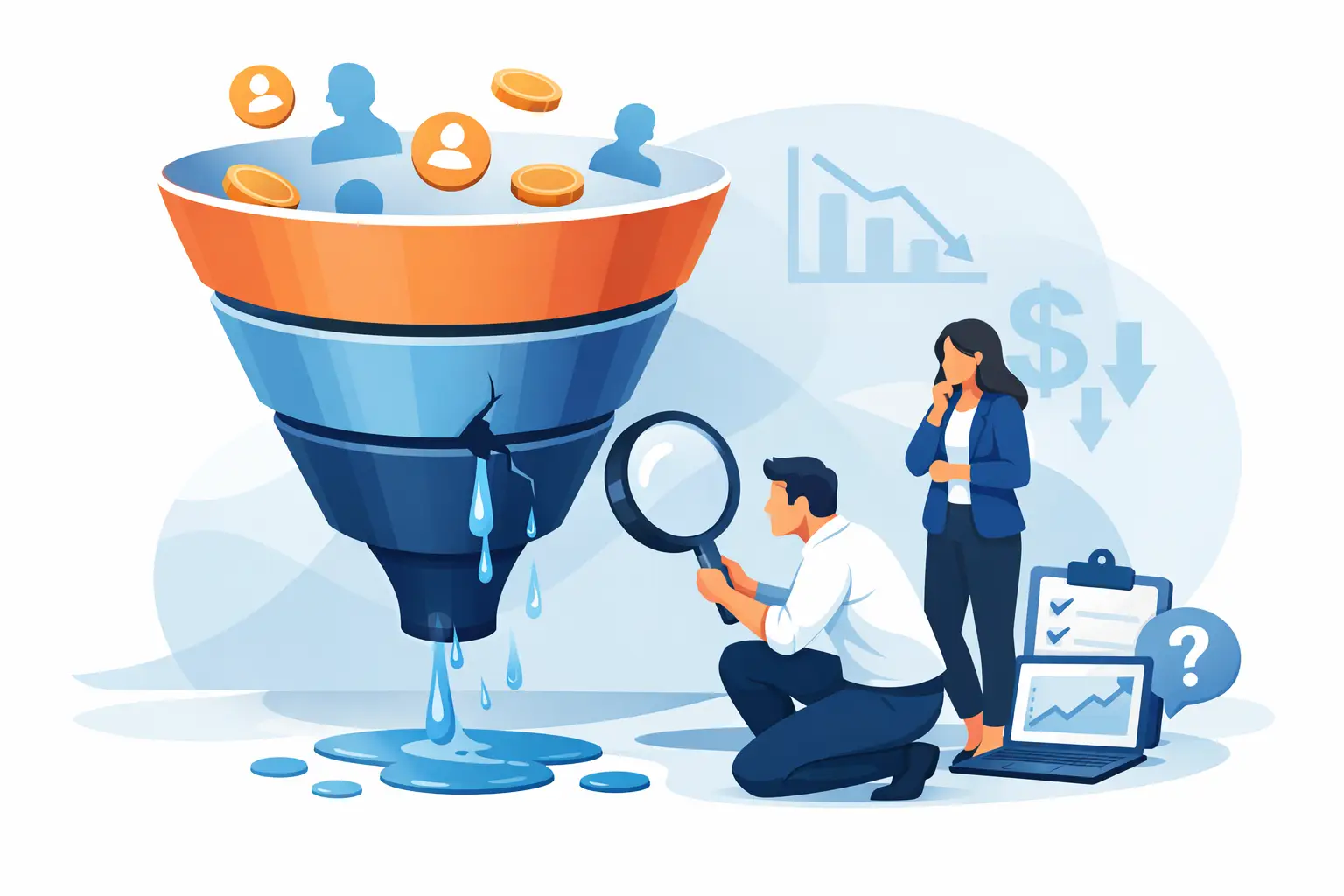
The same applies to local SEO. Ranking in the map pack is valuable, but a weak website can waste that advantage. Slow mobile pages, unclear service information, missing trust signals, and difficult booking flows create leakage after the search result has done its job.
This is why channel reporting should not stop at impressions, clicks, or ranking positions. Track calls, qualified leads, booked appointments, show rates, signed matters, funded loans, and closed transactions where possible. The closer reporting gets to revenue, the easier it becomes to decide where the next dollar belongs.
How to Allocate Budget Without Guessing
Most established service businesses should not frame this as an either-or decision. The more useful question is sequencing.
If you need leads immediately and have a clear intake process, start with a controlled Google Ads campaign while building the local SEO foundation underneath it. Ads create immediate market feedback. SEO creates the asset that reduces future dependence on ads.
If your business already receives steady referrals but is nearly invisible in local search, prioritize SEO and reputation systems first. You may not need aggressive ad spend until the website, Google Business Profile, reviews, and booking experience can convert demand properly.
If your team cannot answer calls consistently, fix that before scaling either channel. More traffic will only make the operational problem more visible. Put call handling, automated follow-up, and qualification rules in place, then increase spend with confidence.
A disciplined allocation usually accounts for four conditions: how quickly you need pipeline, the cost and lifetime value of a new client, the strength of your current local presence, and your team's capacity to respond. A high-value legal matter can justify expensive clicks. A dental practice with appointment capacity may benefit from a broader blend of maps visibility and paid new-patient campaigns. A real estate team may need neighborhood-level SEO while using ads selectively for immediate seller or buyer opportunities.
Build for Control, Not Channel Dependency
The strongest search strategy is not the one with the largest ad budget or the most ranking reports. It is the one that gives the business control over demand capture, lead qualification, follow-up, and measurement.
Use Google Ads when speed and precise demand testing justify the cost. Build local SEO because durable visibility and trust compound. Then connect both to an intake system that responds fast enough to capitalize on the attention you paid to earn. That is where marketing stops being a collection of vendor tasks and starts operating like infrastructure.